
Want innovative marketing campaigns 2025 examples that show real ideas rather than big budgets? Here they are.
Think about what happened in 2025. Duolingo “killed” its owl mascot. Apple TV+ built a working office inside a glass box in a New York train station. A Chicago sandwich chain made fifty ads for its 50th birthday. A clothing brand dared flat-earthers to go find the edge of the planet.
This guide covers 21 recent marketing campaigns from 2025, plus one 2024 campaign that kept winning and one 2025 campaign that flopped. For each one, you’ll see what the brand did, why it worked and how hard it would be to copy.
The innovative marketing campaigns 2025 examples below come from brands working in AI, experiential and social media. Some are still playing out, so read each entry as a short campaign case study of what brands did in 2025 and 2026.
Near the end, there’s a simple plan for building your own campaign on a small budget.
Key Takeaways
- The best marketing campaigns of 2025 gave people something to join, not just something to watch.
- Big budgets and AI aren’t what make a campaign innovative. A sharp idea, good timing and a clear point are.
- Five to start with: Spotify Wrapped, the “death” of Duolingo’s owl, Apple TV+’s Severance glass cube, Andrex’s “First School Poo” and Jet-Puffed’s Easter egg-price kit.
- Speed and real-life relevance beat polish. Jet-Puffed’s $1.99 kit sold out within days.
- AI helps, but it isn’t the idea. Coca-Cola’s AI holiday ad drew pushback, while Mr. Submarine used AI only for a gag.
- You can shrink every big idea to fit a small budget, from a year-in-review email to a styled shop window.
What Makes a Marketing Campaign Innovative in 2025?
A marketing campaign is a planned push with a start date, an end date and one clear goal. Posting every day keeps a brand visible. A campaign is what people remember.
Good ones share four parts: a measurable goal, a real feel for the audience, a hook that stops the scroll and a way to track results. They also come in different types. Some go for virality, some invite fans to make content, and others work with creators, launch a product, ride a news moment or build a live experience.
So what makes a campaign innovative? Not a huge budget, and not “we used AI” either. It feels new when it does at least one of these well:
- It gives people something to join, not just something to watch.
- It reacts to real life while real life is still happening.
- It makes one clear point you can say in a single breath.
- It breaks a rule everyone else in the category follows without thinking.
None of that needs deep pockets. It needs a sharp idea and the nerve to ship it.
Here are 21 recent innovative marketing campaigns 2025 examples, from big brands and small ones. They’re a mix of popular ad campaigns, popular marketing campaigns and creative marketing campaigns 2025 produced. Each includes a note on why it worked, plus a quick budget and copy-difficulty label.
1. Columbia’s “Expedition Impossible”
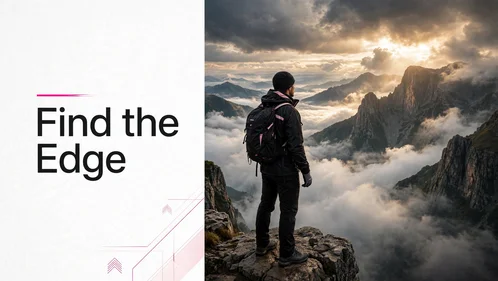
Outdoor brand ad campaigns love putting tough people on mountains. Columbia tried something weirder.
In December 2025, CEO Tim Boyle ran an open letter in The New York Times. He offered the whole company to anyone who could prove the Earth is flat. The only rules: send proof that you reached the edge, and wear Columbia gear on the way.
The stunt grew out of “Engineered for Whatever,” a platform that launched in August 2025 with a chaotic, funny film about the dangers of the outdoors, as Creative Salon describes it. Creative Review explained how the joke circled back to how tough the gear is. Nobody found an edge, so the CEO kept his company.
Result: The agency, adam&eve\TBWA, reports 10.4 million views, $2.4 million in earned media value, 80 million in reach and 261 pieces of coverage, according to its case study. It also took the Brand Experience & Activation Grand Prix at Cannes Lions 2026, as SGI Europe reported.
Why it worked: It was a big, silly bet that matched the product promise: gear that works anywhere.
Budget and copy difficulty: Medium budget. Medium to copy. Any brand can make a bold dare, but it helps if the boss will sign the letter.
2. Mr. Submarine’s 50 Ads for 50 Years
Most brands make one anniversary film. Mr. Submarine, a Chicago sub chain with about 25 shops, made fifty. Its agency, Quality Meats, called it a dumb idea and went ahead anyway. The spots bring in local personalities, goofy costumes and the old jingle as a punchline, plus some AI to check in on characters from old commercials. WTTW reported that the owner admitted the plan sounded far too big for the budget, and that honesty is half the charm. LBB Online has the launch details.
Result: Chicago public broadcaster WTTW and the trade site LBB Online both covered it.
Why it worked: A funny dare, a local feel and a bit of honesty about the budget made a small chain feel big.
Budget and copy difficulty: Low budget. Easy to copy.
3. Duolingo’s “Death of Duo”
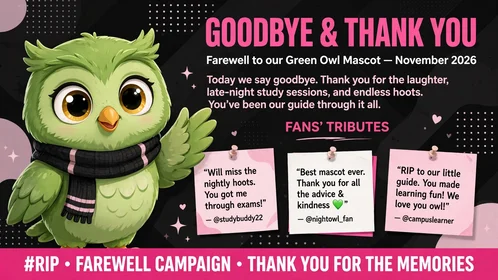
On February 11, 2025, Duolingo announced that Duo, its green owl, was dead. Cause: unknown. Fans flooded the comments with theories, other brands piled on, and hashtags like #RipDuo kept the whole thing in one place.
On February 24, Duo rose from a coffin in the back of a pickup truck. Campaign Asia asked whether it was genius or just confusing, but people talked about it for two weeks either way.
Result: Meltwater counted about 169,000 mentions of the mascot between February 4 and 17. Mentions jumped roughly 25,560% on the day of the announcement. TechCrunch reported, citing Appfigures, that the same day brought Duolingo’s highest worldwide iOS downloads of the year so far, about 15% above the 2025 average.
Why it worked: Duo already had years of fan love behind him. You have to care about someone before you can mourn them, and a simple hashtag turned fans into co-writers.
Budget and copy difficulty: Low media cost, but you need a mascot people love. Hard to copy.
You don’t need a mascot to try something similar. User-generated content campaigns work when the ask is tiny, like a photo prompt, a remix contest or a short challenge. Co-creation goes one step further, with the brand letting fans help shape the content or even the product.
4. Spotify Wrapped 2025
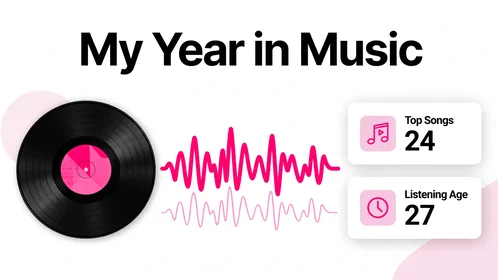
Wrapped isn’t new. It lands every December, and what’s interesting about 2025 is how well it still works. Spotify turns each person’s listening data into a story about who they are. This year it added new touches, like a “Listening Age” score, and Fast Company noted how many people were checking theirs.
Result: Spotify said Wrapped 2025 reached more than 200 million engaged users in its first 24 hours, up 19% on the year before. People shared it more than 500 million times in that first day, up 41%. TechCrunch has the numbers, and Spotify counts a user as engaged if they view at least one story.
Why it worked: Spotify didn’t say “here’s what you played.” It said “here’s who you are.” People share things that say something about themselves.
Budget and copy difficulty: High budget, since it runs on product data. Medium to copy. A small brand can send a year-in-review email, a customer milestone or a stat about how someone used the product. A tip based on past orders does the same job.
5. Coca-Cola’s “Share a Coke” Relaunch
Share a Coke started in Australia in 2011, when Coca-Cola swapped its logo for popular first names. In 2025 it came back for a generation that had never seen it.
According to LBB Online, WPP Open X developed the relaunch, led by VML. Names returned to cans and bottles from April in a rolling launch across more than 120 countries, as Strategy reported.
Coke also added a digital tool called Share a Coke Memory Maker, which lets people make personalized videos from their own content.
Why it worked: People love seeing their own name. That insight doesn’t expire. Only the audience changes.
Budget and copy difficulty: High budget. Medium to copy. A small brand can print names on cups, packaging notes or thank-you cards.
6. Calvin Klein and Bad Bunny
Calvin Klein has a long history of bold underwear ads. For its Spring 2025 Icon Cotton Stretch launch, it teamed up with Bad Bunny.
Photographer Mario Sorrenti shot the campaign in Puerto Rico, with the singer dancing to his song “EoO.” The brand timed it to the buzz around his new album.
Result: WWD reported about $8.4 million in media impact value in under 48 hours. That came with more than 3.7 million likes across Instagram and TikTok and over 56 million video views.
Why it worked: The brand picked an artist at the peak of his fame, and the song did half the work.
Budget and copy difficulty: High budget. Hard to copy, though the lesson on timing is free.
Most brands can’t hire a global star, and they don’t need to. Influencer deals often treat a creator like an ad slot, while creator partnerships treat them as a real voice with loyal fans, so the post feels like a recommendation. Micro-influencers have smaller but more trusting followings, and they suit short-form video and TikTok campaigns well at a fraction of the cost of celebrities.
7. Dyson’s “Airbrow” April Fools’ Prank
On April Fools’ Day 2025, Dyson announced the Airbrow, a tiny tool that supposedly used precision airflow to shape eyebrows. It was a joke. The video copied the style of Dyson’s real Airwrap launches, and the brand worked with UK beauty creator Victoria Magrath on it. Hypebae ran the “launch” before the reveal that the product doesn’t exist. A year later, Dyson Beauty followed up with a spoof pet range, Marketing Interactive reported.
Result: The Chartered Institute of Marketing cited the Airbrow in its April Fools’ guide for marketers as a good example of a brand-voice prank.
Why it worked: It sat right on the edge of believable, which is where the best April Fools’ ideas live. And it sounded exactly like Dyson.
Budget and copy difficulty: Low to medium budget. Easy to copy. Any brand can joke about a fake product in its own voice.
8. Jeep’s 2026 Grand Wagoneer
Jeep skipped the serious car ad. It cast comedian Iliza Shlesinger in a “let me pitch you an ad idea” setup that winks at the brand’s cheeky side.
The agency was Highdive. It shows how commercial campaigns can feel more like entertainment, the same trick Columbia’s “Engineered for Whatever” launch used above.
Why it worked: The audience was in on the joke, so it never felt like a hard sell.
Budget and copy difficulty: High budget. Medium to copy.
9. Jet-Puffed’s Easter Egg Kit
Egg prices hit record highs in early 2025, and Easter was close. Jet-Puffed heard the grumbling from families and launched a “Dip & Decorate Dozen” kit with jumbo marshmallows, six food colors, tiny tongs and decorating pens. It sold on Walmart’s website for $1.99, and CNN reported on it just before the holiday.
Result: The kits sold out fast. The Santa Fe New Mexican saw the company’s website list them as sold out within days.
Why it worked: Speed beat polish. The production was simple, and the timing was the whole idea.
Budget and copy difficulty: Low budget. Easy to copy.
10. Apple TV+’s Severance Glass Cube
Experiential marketing puts people inside the brand story instead of showing them an ad. The best experiential campaigns share one thing: people stop walking and start filming.
This one did exactly that. A few days before season two premiered, Apple TV+ dropped a glass cube into Grand Central Terminal in New York. Inside were desks and computers styled like the show’s Lumon office, staffed by actors pretending to work. Later, the real cast stepped in too, according to LBB Online.
Rush-hour commuters got to watch people “at work” in a show about work. It’s easily one of the best experiential marketing activations of the year.
Why it worked: The place matched the story, and the scene was easy to film and share.
Budget and copy difficulty: High budget. Medium to copy, because the idea scales down to a shop window.
Here’s the experiential marketing case study in short. The goal was to build buzz before season two, and the idea was to bring the show’s sterile office into real life, where real people rush to work. A small brand can borrow the thinking: find a place where your story already makes sense, like a shop window, a market stall or a pop-up table.
11. KFC x Stranger Things
Ahead of the final season of Stranger Things, KFC UK renamed itself “Hawkins Fried Chicken.” The hero film, made by Mother London and directed by Nick Roney, follows a team of employees trying to deliver chicken through a broken, monster-filled town, as LBB Online describes it. The final season premiered in the UK on November 27, 2025, and KFC launched a limited menu that included Stranger Wings. It’s one of the more inventive experiential marketing campaigns of the year.
The idea travelled, too. In Australia, KFC opened what it called the world’s first underground KFC in Sydney’s abandoned Wynyard tunnels, with free entry, as B&T reported. Marketing Interactive said the platform ran across Australia, South Korea and the UK.
Why it worked: KFC didn’t just stick its logo on a show. It built a version of KFC that could live inside the show. Netflix’s partnerships team called it building a world, not just a campaign.
Budget and copy difficulty: High budget. Hard to copy, but any brand can borrow a world its customers already love, like a local event or a creator’s community.
12. Tamburins’ Pop-Up Opera
The Korean fragrance and skincare brand staged an opera that looked like a sunny beach, with sand mounds, bright towels and sunbathers who suddenly burst into song. It’s luxury marketing that refuses to be stiff, and one of the most fun examples of experiential marketing from 2025. Live setups like this are often called experiential marketing activations.
Why it worked: A surprise in a public space gives people a story to tell.
Budget and copy difficulty: Medium to high budget. Medium to copy.
13. Netflix House
Netflix had run dozens of short pop-ups. In late 2025, it opened a permanent Netflix House, first near Philadelphia on November 12 and then in Dallas on December 11.
Entry is free, and fans pay extra for experiences based on shows like Wednesday, One Piece, Stranger Things and Squid Game, Scripps News reported. It’s the biggest step yet from one-off experiential brand activations to a place fans can come back to.
Why it worked: It turned short-lived buzz into somewhere fans can return to.
Budget and copy difficulty: Very high budget. Hard to copy.
14. TD’s “Own a Piece of It”
How do you explain fractional investing in simple terms? TD’s answer was a billboard with a window cut out of it. The cut-out sat over real storefronts and offices, so the logos behind it looked like part of the poster, and people saw a slice of famous brands and got the point: you can own a slice too. There’s a short breakdown at eMarketer, and it’s one of the cleanest experiential advertising campaigns of the year.
Why it worked: It explained a hard idea with one picture.
Budget and copy difficulty: Medium budget. Medium to copy.
15. Wicked: For Good
For the Wicked sequel, several NBCUniversal teams joined forces on one of the biggest partnership-led film campaigns ever. More than 400 partners signed on worldwide, and over 165 of them returned from the first film, according to NBCUniversal.
The campaign also included a Dancing With the Stars takeover, “Wicked Weeks” on NBC and TODAY, and Wicked-themed experiences at Universal theme parks.
Result: NBCUniversal says the campaign delivered more than $330 million in media and promotional value. It also says the film had Fandango’s biggest first-day ticket presale of 2025.
Why it worked: Every partner carried the story to a different audience, in places where people already were. Fans didn’t have to go anywhere new.
Budget and copy difficulty: Very high budget. Hard to copy. A small version is a shared promotion with three or four local businesses.
16. ChatGPT’s “Everyday Moments”
In late September 2025, OpenAI launched the first large brand campaign for ChatGPT. The short films show simple scenes, like planning dinner, taking a road trip with a sibling or working on a pull-up routine.
OpenAI’s in-house team made them with the agency Isle of Any and director Miles Jay, according to The Drum. LBB Online says each one drops viewers into the final scene of a tiny movie.
Campaign Asia reported that it ran on TV, streaming, outdoor and social in the US, UK and Ireland.
Why it worked: A new technology feels distant until people see where it fits into their day. These films showed small, real uses instead of big promises.
Budget and copy difficulty: High budget. Easy to medium to copy. If your product is new, show the most normal use of it first.
17. Nike’s “Why Do It?”
Good advertising campaigns don’t always need a stunt. Many great ad campaigns, and plenty of the best advertisements of 2025, started with a true feeling instead. On September 4, 2025, Nike reintroduced its “Just Do It” slogan to a new generation, with a hero film featuring athletes such as Carlos Alcaraz, Saquon Barkley, LeBron James, Rayssa Leal and Qinwen Zheng. It asks the doubting question many young athletes ask themselves, and Nike says the point is that greatness is a choice, not an outcome. Details are in the Nike newsroom.
Why it worked: It spoke to doubt instead of hype, which feels more honest.
Budget and copy difficulty: High budget. Medium to copy, because any brand can open with the doubt its customers already feel.
18. Andrex’s “First School Poo”
Many award winning marketing campaigns start with a true story, not a stunt. Andrex is one of the recent innovative marketing campaigns 2025 UK brands can learn from.
It sounds silly, and it is. It’s also smart. Andrex found that roughly three in four UK school kids hold it in rather than use the toilet at school, so the brand and its agency, FCB London, made a film that treats that first brave school visit like a victory lap. The Andrex puppy helps out.
The work followed earlier films such as “First Office Poo” under the brand’s “Get Comfortable” idea. Campaign explains how real stories shaped the scripts, and LBB Online has the research behind it.
Result: It was the May and June winner of the Thinkbox award for TV advertising creativity, according to Campaign.
Why it worked: It started with a real fact about kids and kept the brand’s voice steady across years of adverts.
Budget and copy difficulty: Medium to high budget. Medium to copy, because any brand can ask customers for true stories.
19. Hornbach’s “No Project Without Drama”
The German DIY chain has spent years turning home repairs into epic movies. Its 2025 spot, from HeimatTBWA, made a bathroom makeover feel closer to a fantasy film.
Muse by Clios picked it as a European favorite. It’s one of the most memorable creative ad campaigns and adverts 2025 gave us.
Why it worked: It keeps the same bold voice year after year, so every new spot feels both familiar and fresh.
Budget and copy difficulty: High budget. Medium to copy, because the real lesson is a steady brand voice.
20. Mattel’s Barbie With Type 1 Diabetes
Mattel added a Barbie with Type 1 diabetes to its line in 2025. The doll comes with a glucose monitor and an insulin pump, the same gear many kids use every day. There was no dramatic framing, and NBC News covered the launch.
Why it worked: It gave kids who rarely see themselves in toys a doll that looks like them, and the tone stayed sincere.
Budget and copy difficulty: Medium budget. Medium to copy. Be specific about a group your product usually ignores.
21. Ooma AirDial’s “Copper Monster”
B2B doesn’t have to be dull. Ooma AirDial sells a replacement for old copper phone lines, the kind that power elevator phones and fire alarm panels.
Not exactly a sexy topic, so the agency, Agency SOS, gave the problem a face: a “copper monster” starring in pin-up style calendars. MediaPost reported that the images roll out on LinkedIn and email, and show up at trade shows for elevator contractors and building managers.
Why it worked: Even a boring product can get a personality when you joke about the problem, not the customer.
Budget and copy difficulty: Low to medium budget. Easy to medium to copy.
Campaigns From 2024 That Kept Winning in 2025
Great ideas don’t expire on December 31. Some of the most talked-about recent creative marketing campaigns brands made in 2024 were still picking up awards in 2025.
If you want examples of creative marketing campaigns 2024 2025 brands can learn from, start with CeraVe. That overlap is also why lists of innovative marketing campaigns examples, 2024 and 2025 alike, often share the same winners.
CeraVe’s “Michael CeraVe.” Before its first Super Bowl ad, CeraVe spent about four weeks spreading a fake conspiracy theory that the actor Michael Cera had created the skincare brand. The game-day commercial debunked it, with CeraVe’s dermatologists taking Cera on. It all ran ahead of Super Bowl LVIII in February 2024.
Result: According to the entry on Cannes Lions’ LoveTheWork platform, it earned 32 billion impressions, 15.4 billion of them before the Super Bowl. It also had the number one share of voice during the game. It was a grand winner at the 2025 Clio Awards too, per Ads of the World.
Why it worked: CeraVe didn’t just buy a celebrity. It built a month-long joke the whole internet wanted in on, then let the commercial be the punchline.
Budget and copy difficulty: High budget for the Super Bowl slot. Medium to copy, because the joke and the creators cost far less than the ad.
What Went Wrong: Coca-Cola’s AI Holiday Ad
Not every big idea lands. For the second year in a row, Coca-Cola remade its classic “Holidays Are Coming” ad with generative AI.
eWEEK noted that the brand worked with AI studios and WPP Open X, and that many YouTube viewers were unhappy. Marketing Interactive’s look at online chatter found that most of it was neutral, with a smaller share of mixed opinions.
The lesson: AI was the headline, and the headline was the problem. Mr. Submarine used AI for a joke about old commercial characters, not as the main act. Use AI to speed up work and test ideas, but keep the human heart of the idea. Learn more about generative AI for marketing and how brands can use it to improve content creation and campaign workflows. Viewers notice when it’s missing.
Innovative Marketing Campaigns 2025 Examples and Their Results
Here is a quick view of all 21 campaigns, plus the 2024 CeraVe winner and the Coca-Cola AI miss.
| Campaign | Brand | Best proof or result |
| Expedition Impossible | Columbia | 10.4M views, $2.4M earned media value, 80M reach (agency data). |
| 50 ads for 50 years | Mr. Submarine | Coverage from WTTW and LBB Online. |
| Death of Duo | Duolingo | About 169,000 mentions in two weeks. Downloads hit a 2025 high on day one. |
| Wrapped 2025 | Spotify | 200M+ engaged users and 500M+ shares in 24 hours. |
| Share a Coke relaunch | Coca-Cola | Rolling launch across 120+ countries. |
| Icon Cotton Stretch | Calvin Klein and Bad Bunny | About $8.4M media impact in under 48 hours. |
| Airbrow April Fools prank | Dyson | Cited by the Chartered Institute of Marketing as a good April Fools example. |
| Grand Wagoneer ad | Jeep | No public numbers. |
| Dip & Decorate Dozen | Jet-Puffed | $1.99 kit. Sold out within days. |
| Severance cube | Apple TV+ | Trade press coverage. No public numbers. |
| Hawkins Fried Chicken | KFC | Ran in the UK, Australia and South Korea. |
| Pop-up opera | Tamburins | No public numbers. |
| Netflix House | Netflix | Two permanent venues opened in late 2025. |
| Own a Piece of It | TD | No public numbers. |
| Wicked: For Good partnerships | NBCUniversal | 400+ partners and $330M+ in media and promo value, per NBCUniversal. |
| Everyday Moments | ChatGPT (OpenAI) | First large brand campaign. No public numbers. |
| Why Do It? | Nike | No public numbers. |
| First School Poo | Andrex | Thinkbox award for TV advertising creativity. |
| No Project Without Drama | Hornbach | Named a European favorite by Muse by Clios. |
| Barbie with Type 1 diabetes | Mattel | National news coverage. |
| Copper Monster calendars | Ooma AirDial | No public numbers. |
| Michael CeraVe (2024) | CeraVe | 32B impressions. Grand winner at the 2025 Clio Awards. |
| Holidays Are Coming (AI) | Coca-Cola | Mostly neutral online talk. Some viewers are unhappy. |
Six Patterns Behind the Best Marketing Campaigns of 2025
Look across all of these innovative marketing campaigns, recent examples from 2025 included, and the same few things show up.
1. People want to feel seen. Spotify turned data into identity, and Share a Coke put a person’s own name on the can. Andrex began with research about kids. Generic marketing gets ignored.
2. Partners and creators carry the reach. Brand accounts alone rarely travel far. Artists, creators, partners and fans do. Wicked’s 400-plus partners are the extreme example.
3. AI helps, but it is not the idea. Mr. Submarine used it for a gag. Coca-Cola used it as the main event and got pushback.
4. Culture moves faster than campaigns. Jet-Puffed did not wait three weeks for approvals.
5. Joining beats watching. Duolingo’s hashtags let people play along, and the Severance cube gave them something to film.
6. Simple wins. Own a piece of it. Find the edge of the Earth. Fifty ads for fifty years. You can say each one out loud in a breath.
Together, these recent innovative marketing campaigns examples from 2025 show how marketing innovation really works. A few bigger shifts sit behind the patterns. Brands lean on AI for speed and personalization, and creator-led reach keeps growing. These changes reflect how AI is revolutionizing the marketing industry. Quick reactions to news and prices pay off. Short pop-ups are turning into permanent spaces, like Netflix House. And humor that pokes fun at the brand itself is replacing the stiff, perfect ad.
How to Use These Ideas on a Small Budget
You do not need a Cannes-winning budget. You need a smaller version of the same thinking.
• Start with a real customer annoyance. Jet-Puffed started with pricey eggs, not a media plan.
• Go deep with one audience. A hundred people who truly connect will do more for word of mouth than ten thousand who barely noticed you.
• Turn customers into content. Their reviews and photos are more believable than anything you write. Make sharing easy, then get out of the way.
• Shrink the big idea. Spotify’s version is a year-in-review email. The Severance cube’s version is a shop window styled like a scene from a show. Mr. Submarine’s version is a funny local ad made with local people. An AI video generator for weekly content calendars can also help brands turn campaign ideas into regular video content.
• Joke about yourself, not your customers. If everyone in your category sounds the same, a little self-mockery can stand out fast. Dyson’s fake Airbrow worked because it sounded exactly like Dyson.
• Share one clear idea, quickly. If people will not share it, paid media will not save it.
How to Track Campaign Results
Running a campaign without numbers is like driving with your eyes shut. You might arrive, but you will not know how.
Watch four things. Reach shows how many people saw it. Engagement shows whether they cared enough to act. Sentiment shows how they feel, whether excited, annoyed or shrugging. Conversions tie the buzz to results like clicks, sign-ups and sales.Marketing automation can help businesses manage campaign follow-ups, personalize communication and respond to customer actions.
The Duolingo stunt shows how this works in real life. People tracked mentions and app downloads, two simple numbers tied to the goal. Free analytics inside each social platform are enough to start. As you grow, social listening tools can track mentions, tone and even logos in images across the web. Pick your numbers before launch so you know what success looks like, and check in while the campaign is still running.
How to Create Your Own Campaign
Here is a simple path.
1. Set one goal. Awareness, sign-ups or sales. Not all three. Make it a number, like a 5% engagement rate.
2. Know your audience. What annoys them? What makes them laugh? Go beyond age and location.
3. Choose your platforms. Go where your people already are. You do not need to be everywhere.
4. Make something thumb-stopping. Bold visuals, surprising humor, an honest story or something useful. Commit fully.
5. Plan for replies. Someone has to answer comments, handle bad feedback and share the best fan posts.
6. Build in measurement. Set up tracking before launch, then use what you learn next time.
Conclusion:
The innovative marketing campaigns 2025 examples gave us had one thing in common. They felt like they were made by people who understood a real moment. A dare, a billboard window, a marshmallow kit, a puppy in a school bathroom. None of it was complicated.
Pick one idea from this list, shrink it to fit your size, and test it this month.
FAQs
What are the best innovative marketing campaigns of 2025?
The best marketing campaigns 2025 gave us include Spotify Wrapped, Duolingo’s Duo stunt, Apple TV+’s Severance cube, KFC’s Hawkins Fried Chicken, Netflix House, Columbia’s Expedition Impossible, Mr. Submarine’s 50 ads, TD’s Own a Piece of It billboards, Andrex’s First School Poo and Jet-Puffed’s egg-price Easter kit.
What were the best ad campaigns of 2025?
The best ad campaigns 2025 produced include Nike’s “Why Do It?”, ChatGPT’s “Everyday Moments,” Andrex’s “First School Poo” and Hornbach’s “No Project Without Drama.”
What is experiential marketing?
It is marketing that lets people step inside the brand story, such as a pop-up, a live show or a street stunt, instead of just watching an ad.
What are some examples of experiential marketing from 2025?
Apple TV+’s Severance cube, Tamburins’ pop-up opera, Netflix House and KFC’s underground Hawkins Fried Chicken in Sydney are good ones. TD’s cut-out billboard is a smaller, out-of-home example.
What marketing trends are shaping 2025?
AI-assisted production, personalization, creator-led reach, real-time reactions, permanent experiential spaces and self-aware humor.
Can small businesses copy these ideas?
Yes. Copy the thinking, not the budget. A small shop can still react fast, run a cheeky local stunt, or ask customers to share a photo.
What is co-creation marketing?
It is when a brand invites its audience to help make content, products or experiences instead of only consuming them. People support what they helped build.
How are creator partnerships different from influencer marketing?
Influencer deals often buy a single post. Creator partnerships build a longer relationship, with the creator speaking in their own voice to their own audience. That feels more like a recommendation than an ad.
What role does AI play in marketing campaigns?
Three main ones: personalizing messages, helping make creative faster, and predicting which offer fits which person. Coca-Cola’s reaction shows it works best when the idea stays human. ChatGPT’s own “Everyday Moments” ads make the same point from the other side, with small human scenes instead of big tech promises.
Is humor risky in marketing?
Sometimes. Keep the joke tied to a real truth about your product, and avoid making fun of your own customers.
How long should a campaign run?
It depends on the goal. A real-time stunt can last days. A brand story, like Hornbach’s, can run for years.
Sources
• Creative Review: Columbia and the flat-earth challenge
• Creative Salon: Columbia’s Engineered for Whatever platform
• WTTW: Mr. Submarine’s 50 videos
• LBB Online: Mr. Submarine marks 50 years
• Campaign Asia: Duolingo’s mascot death stunt
• Meltwater: Duolingo’s dead mascot campaign
• TechCrunch: Duolingo “killed” its mascot
• TechCrunch: Spotify Wrapped 2025 is its biggest yet
• Fast Company: Spotify Wrapped 2025 and Listening Age
• WWD: Bad Bunny and Calvin Klein
• CNN: Jet-Puffed Easter kit
• LBB Online: Apple TV+ Severance at Grand Central
• Scripps News: Netflix House
• eMarketer: TD Bank’s fractional investing ads
• Nike newsroom: “Why Do It?”
• Campaign: Andrex and FCB on purpose-led ads
• LBB Online: Andrex “First School Poo”
• Muse by Clios: Hornbach’s “No Project Without Drama”
• NBC News: Mattel’s Barbie with Type 1 diabetes
• MediaPost: Ooma AirDial’s Copper Monster campaign
• LBB Online: Coca-Cola relaunches Share a Coke
• Strategy: Coca-Cola gets personal again
• Print Week: Coca-Cola revives Share a Coke
• Hypebae: Dyson Airbrow
• Chartered Institute of Marketing: April Fools’ Day guide for marketers
• Marketing Interactive: April Fools’ pranks, including Dyson’s pet range
• LBB Online: KFC x Stranger Things, Hawkins Fried Chicken
• B&T: KFC’s Hawkins Fried Chicken in Sydney
• Marketing Interactive: KFC’s Hawkins Fried Chicken across three markets
• NBCUniversal: How Wicked: For Good became a global collaboration story
• The Drum: OpenAI’s first global ChatGPT campaign
• LBB Online: Isle of Any and ChatGPT’s brand campaign
• Campaign Asia: OpenAI’s ChatGPT campaign
• TBWA: Expedition Impossible case study
• SGI Europe: Expedition Impossible wins at Cannes Lions
• Santa Fe New Mexican: High egg prices drive Easter alternatives
• Campaign: School poo taboo film wins Thinkbox award
• Cannes Lions LoveTheWork: CeraVe “Michael CeraVe”
• Ads of the World: CeraVe “Michael CeraVe”
• eWEEK: Coca-Cola’s AI holiday ads
• Marketing Interactive: Coca-Cola’s 2025 AI holiday ad reactions